
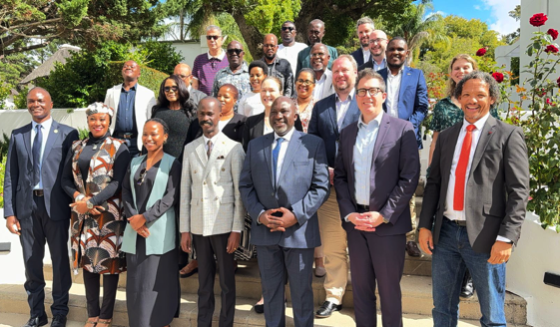
Participants of African Nuclear Security Dialogue, on 5th March 2026 at Cape Town in, South Africa.
The African Commission on Nuclear Energy (AFCONE), in collaboration with the Nuclear Threat Initiative (NTI), successfully convened the Africa Nuclear Security Dialogue, 3-5 February 2026, at Cape town in South Africa, to address the evolving landscape of nuclear safety and security on the Africa continent.
As nuclear technology applications expand across Africa, from medical diagnostics to energy generation, the need for robust security frameworks has never been more critical.
To address these evolving challenges, the African Commission on Nuclear Energy (AFCONE), in partnership with theNuclear Threat Initiative (NTI), organised a high-levelAfrica Nuclear Security Dialogue.
The dialogue brought together a select group of government officials, policymakers, international regulators, and academic experts for interdisciplinary conversations on nuclear materials security, contextualised within the unique geopolitical landscape of Africa
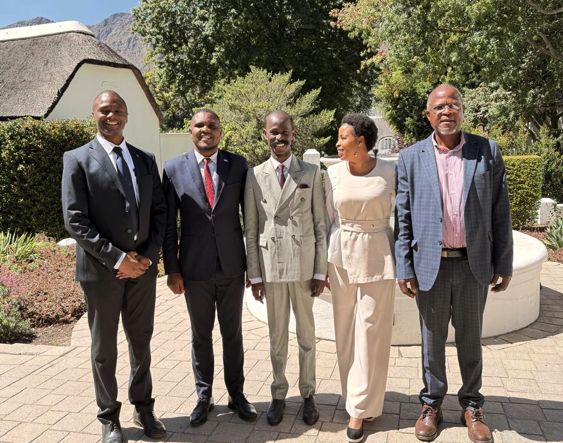
AFCONE Chairperson H.E. Gaspard Liyoko MBOYO accompanied by Interim Executive Secretary Mr. Collins Omondi pose for a group photo with a section of delegation attending African Nuclear Security Dialogue.
The meeting reinforced the continent’s commitment to the Treaty of Pelindaba, which designates Africa as a nuclear-weapon-free zone. The discussions highlighted that while nuclear energy and science are vital for achieving the African Union Agenda 2063, their use must go hand-in-hand with strict safety and security measures.
The dialogue focused on several critical areas aimed at strengthening the African nuclear security landscape including revising IAEA Nuclear Security Recommendations, Strengthening the Amended Convention on the Physical Protection of Nuclear Material (A/CPPNM), preventing Illicit Trafficking and capacity building.
Nuclear security is a fundamental element of the nuclear non-proliferation architecture,” AFCONE Chairperson H.E. Gaspard Liyoko Mboyo at the opening session, emphasising AFCONE’s long-term commitment to supporting member states in strengthening their regulatory infrastructures.
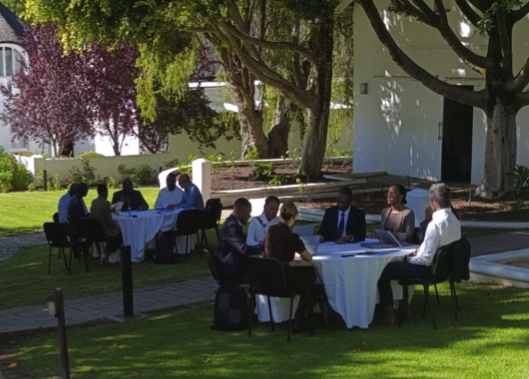
Delegates attending African Nuclear Security Dialogue meeting engaged in group discussion.
H.E. Gaspard Liyoko MBOYO reaffirmed the continent’s commitment to the Treaty of Pelindaba—the cornerstone of the African Nuclear-Weapon-Free Zone.
The meeting concluded with a call for stronger national frameworks and increased investment in nuclear security culture, particularly for academic and professional training in handling radiological sources.