
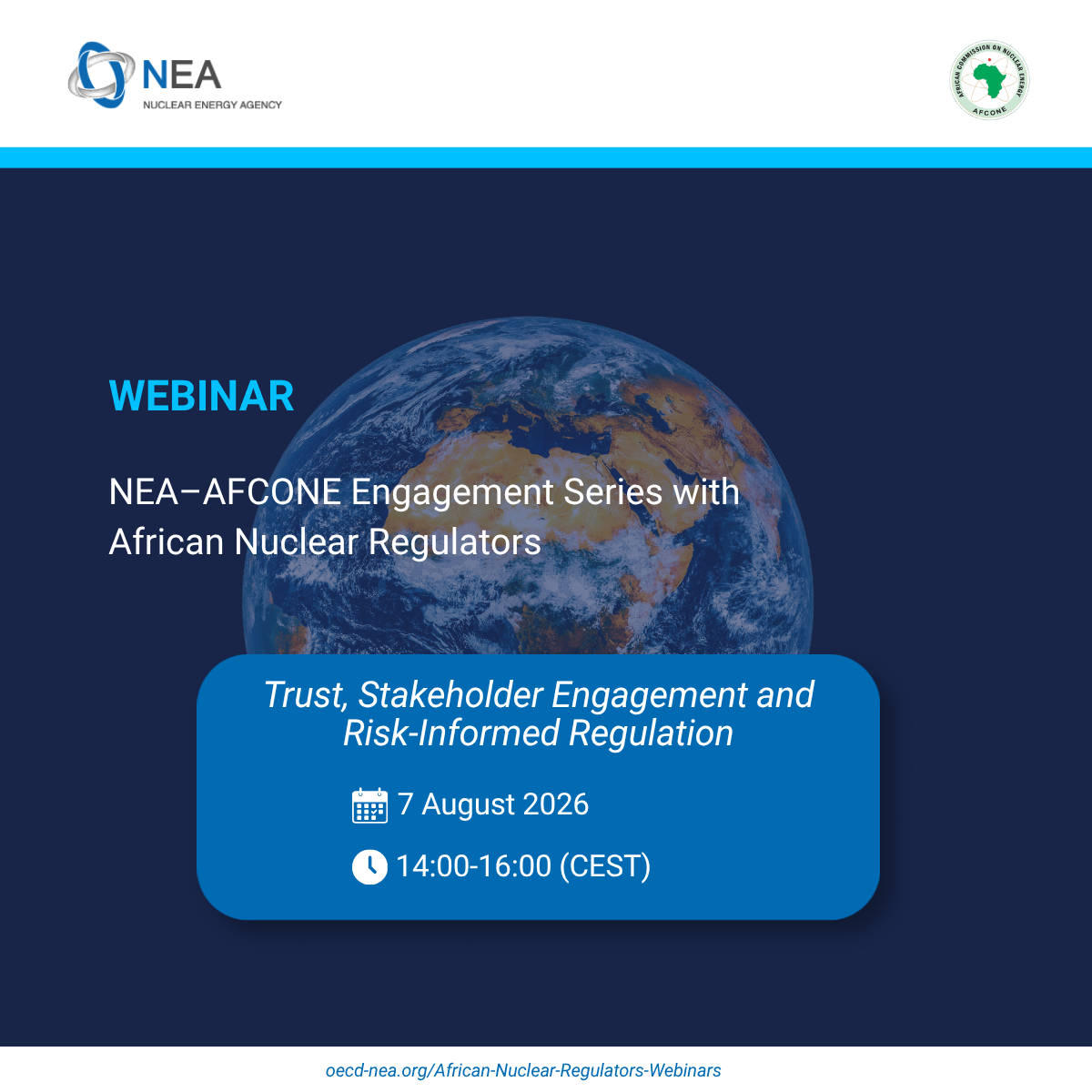
As Africa advances its nuclear energy ambitions, strengthening independent, effective and trusted regulatory systems is critical to ensuring the safe, secure and sustainable deployment of nuclear technologies.
In this context, the OECD Nuclear Energy Agency (NEA) and the African Commission on Nuclear Energy (AFCONE) have jointly launched the NEA–AFCONE Engagement Series with African Nuclear Regulators.
This initiative is part of a broader effort to build regulatory capacity across Africa through regular virtual exchanges and targeted in-person activities. It also aims to provide a structured platform for dialogue, technical exchange and capacity-building, supporting
African regulatory bodies in line with the Pelindaba Treaty and broader development priorities, including Agenda 2063. The initiative aims to strengthen technical expertise, promote peer learning and support the development of robust regulatory frameworks tailored to national contexts.
The NEA–AFCONE Engagement Series with African Nuclear Regulators brings together African nuclear regulators, along with selected policymakers and international partners, to share experience, identify needs and strengthen regulatory frameworks across the continent. It combines regular virtual meetings with opportunities for deeper technical engagement, training and international co-operation.
First topic
Effective engagement by regulators with governments, operators, civil society and the public is essential for nuclear acceptance. The NEA ‘Green Booklet’ on the Characteristics of a Trusted Nuclear Regulator outlines organisational behaviours, attributes, mindsets and beliefs that strengthen transparency, credibility and public confidence. A Self-Assessment Toolkit on Characteristics of a Trusted Nuclear Regulator has also been developed by the NEA for use by nuclear regulatory bodies to implement the ‘Green Booklet’ in the form of a tabletop exercise.
As part of the programme, African regulators will:
· Explore attributes of trusted regulators, based on guidance provided in the NEA ‘Green Booklet;’
· Discuss how trust contributes to regulatory independence and effectiveness, with specific focus on challenges and opportunities in the African region;
· Learn from international experience about the use of the ‘Green Booklet’ and corresponding Self-Assessment toolkit;
· Understand the potential use of the NEA’s Self-Assessment Toolkit on characteristics of a trusted regulator in national contexts (including what is needed to apply the Self-Assessment Toolkit); and,
· Participation in this event will enable representatives of African nuclear regulatory bodies and key policymakers to identify opportunities to build trust within national and regional contexts.
Participation in this event will enable representatives of nuclear regulatory bodies to identify opportunities to build trust within national and regional contexts.
Meeting programme
14:00–14:10 Opening remarks
14:10–14:25 Keynote presentation on NEA ‘Green Booklet’of Characteristics of a Trusted Nuclear Regulator
14:25–14:45 Country case study who used the self-assessment Toolkit
14:45–15:15 Discuss challenges and opportunities for practical application of the ‘Green Booklet’ in the African region: included in this will be breakout groups discussing needs-assessments.
15:15–15:45 Plenary presentation of outcomes from breakout groups and possible action forward
15:45–15:55 Insight and feedback from the NEA Expert Group on Public Communication (EGPC)
15:55–16:00 Summary of key discussion points and possible next steps
Registration is required with participation prioritised for African nuclear regulators and other key stakeholders. For registration contact AFCONE secretariat.