
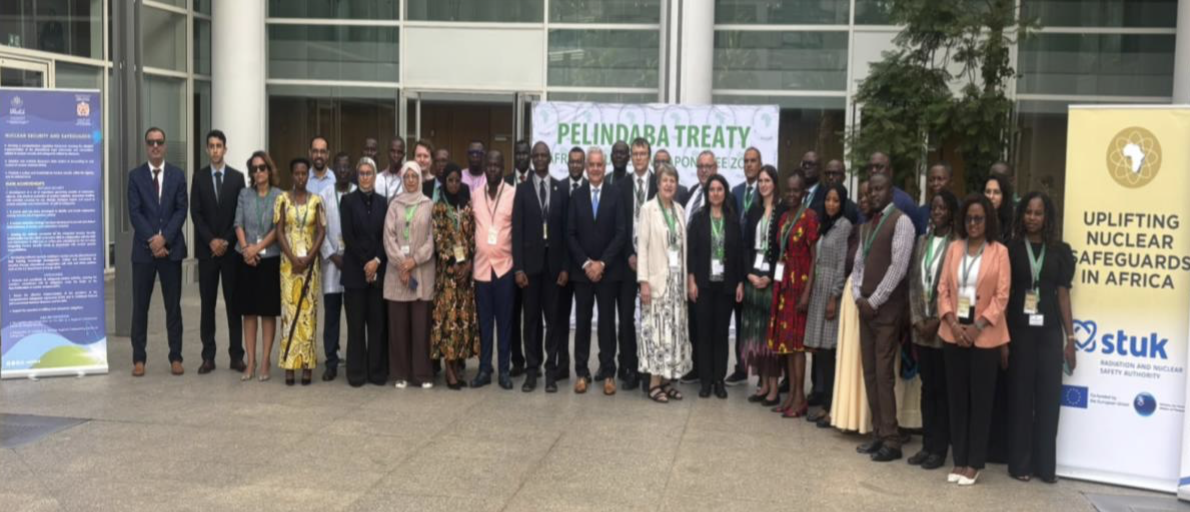
African Member States to the Pelindaba Treaty convened in Morocco for uplifting Nuclear Safeguards on 21/09/2026.
African Commission on Nuclear Energy (AFCONE) in close collaboration with Finland’s Radiation and Nuclear Safety Authority (STUK).
The event was hosted with the critical local support and leadership of the Moroccan Agency for Nuclear and Radiological Safety and Security (AMSSNuR) and backed financially by the European Union (EU).
The program is dedicated to enhancing Nuclear Safeguards and Material Security across African Member States.
The capacity building is another significant milestone in AFCONE collective 5-year journey to “Uplifting Nuclear Safeguards in Africa.
This initiative exemplifies the power of global partnership. By bridging European regulatory expertise with Africa regional technical networks, we are actively constructing a sustainable, continent-wide infrastructure for safe and secure civilian nuclear programs.
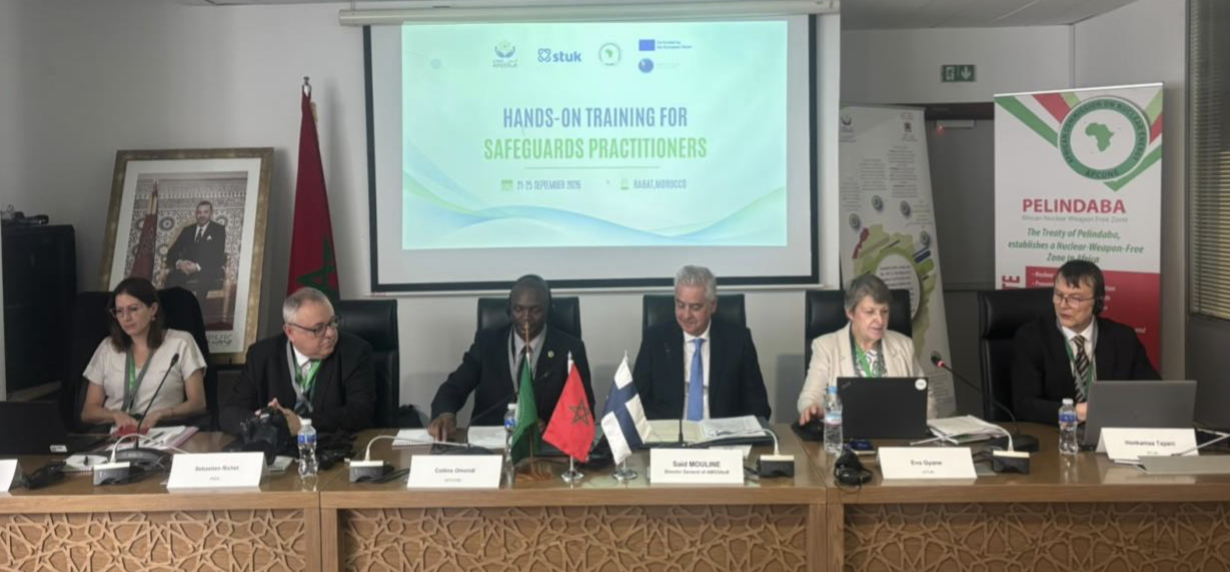
Dr Said MOULINE, the Director General of AMSSNuR officially opens the meeting in company of AFCONE Acting Executive Secretary Dr Collins OMONDI.
As African nations increasingly look toward civilian nuclear technology to satisfy growing socio-economic and energy needs under the African Union’s Agenda 2063, establishing independent and robust regulatory systems is paramount.
Nuclear safeguards act as the foundational technical mechanism to independently verify that nuclear installations and materials remain strictly dedicated to peaceful applications This initiative remains deeply tied to the obligations of the Pelindaba Treaty, which established the African Nuclear-Weapon-Free Zone. Under the treaty, State Parties commit to verifying non-proliferation compliance, primarily through Comprehensive Safeguards Agreements (CSAs) with the International Atomic Energy Agency.
By standardising legislation, upgrading tracking software, and boosting local technical capabilities, this joint regional program ensures that African states maintain full regional ownership of their security obligations while actively fostering safe, clean energy transitions across the continent.