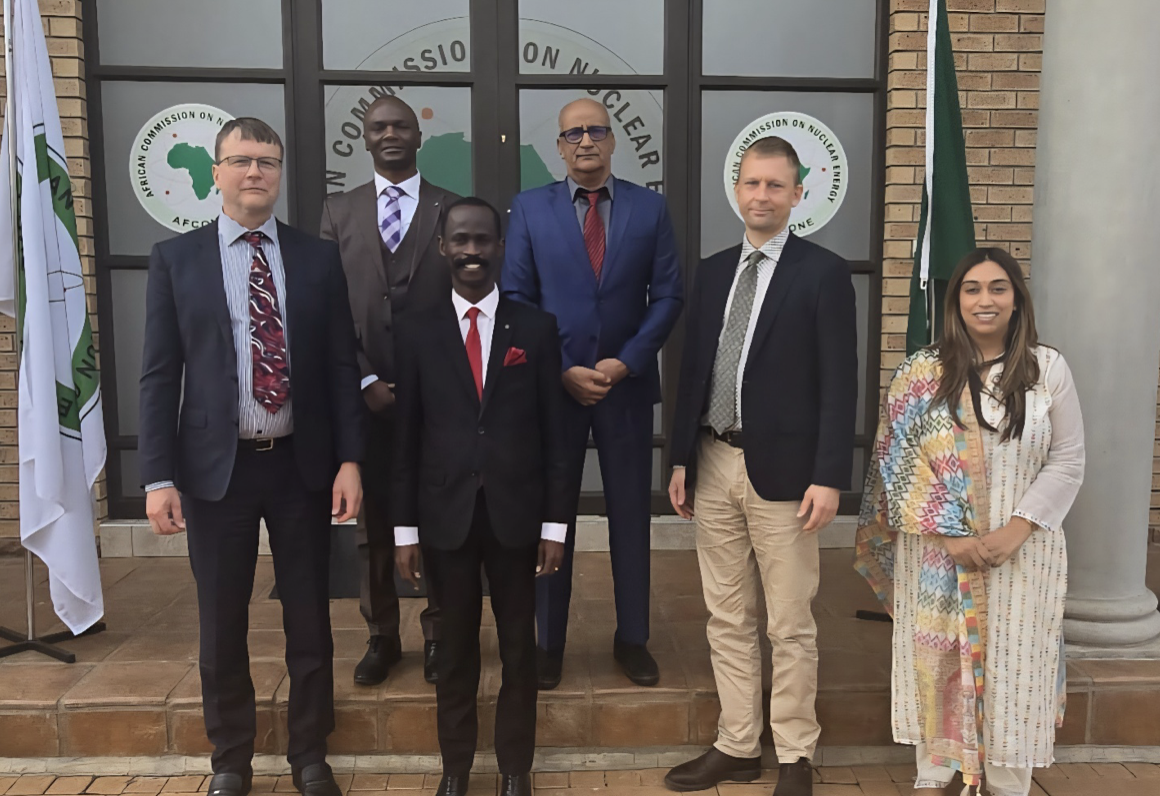
Pictured (left to right): Mr. Tapani Honkamaa (STUK, back), Mr. Collins Omondi (AFCONE), Mr. Gaspard Liyoko Mboyo (AFCONE Chairperson, front), Mr. Ahmed Bezeid Deida (AFCONE Vice-Chairperson, back), Mr. Ossi Lång (STUK), and Ms. Neesha Sewlall (AFCONE Secretariat, front).
The AFCONE Bureau, together with members of the Secretariat, received representatives from the Finnish Radiation and Nuclear Safety Authority (STUK) at the AFCONE Headquarters in Pretoria.
The Bureau and Secretariat of the African Commission on Nuclear Energy (AFCONE) welcomed a delegation from the Finnish Radiation and Nuclear Safety Authority (STUK) at the AFCONE Headquarters in Pretoria for discussions on the ongoing programme “Strengthening Nuclear Material Control Systems in Africa.”
This five-year cooperation agreement, co-funded by the European Union and the Government of Finland, aims to strengthen Africa’s capacity in nuclear safeguards and security. The programme focuses on training nuclear inspectors, train-the-trainer sessions, and capacity-building for policymakers, with the overarching goal of enhancing States’ Systems of Accounting and Control (SSAC) for nuclear materials. These efforts contribute to compliance with IAEA Safeguards Standards, Comprehensive Safeguards Agreements (CSAs), and the Treaty on the Non-Proliferation of Nuclear Weapons (NPT), as well as the Treaty of Pelindaba, which establishes the African Nuclear-Weapon-Free Zone.
The AFCONE Chairperson, Mr. Gaspard Liyoko Mboyo, expressed appreciation to the project partners and co-funders, underscoring the importance of continued capacity-building and technical support to reinforce Africa’s role in global nuclear non-proliferation and the peaceful application of nuclear science and technology. He emphasized that nuclear science and technology are key drivers of sustainable development in energy, health, agriculture, and research, in alignment with the African Union’s Agenda 2063 and the United Nations Sustainable Development Goals (SDGs).
AFCONE noted the successful completion of the first phase of the “Uplifting Nuclear Safeguards in Africa” Programme (2023–2024), which has significantly strengthened safeguards capacity among African States Parties and reinforced their commitment to the peaceful, safe, and secure use of nuclear technologies across the continent. The STUK delegation commended AFCONE for the effective implementation of the safeguards programme, highlighting the participation of 26 African States Parties as a strong testament to the continent’s collective commitment to nuclear safety, security, and peaceful cooperation.
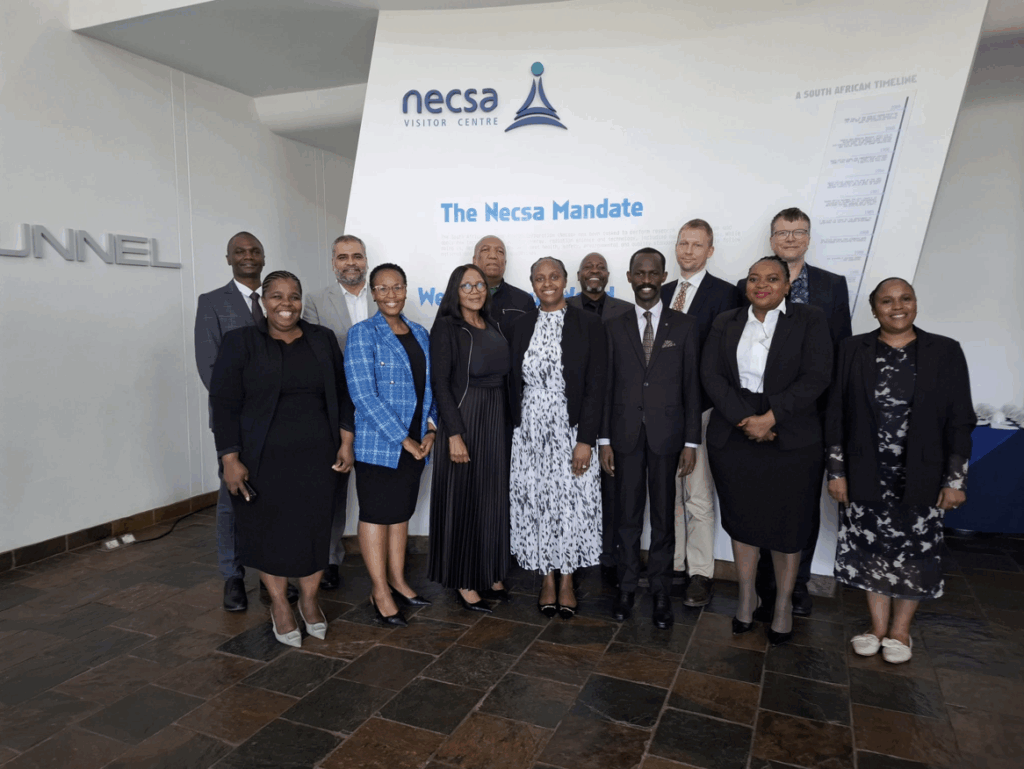
On the sidelines of the meeting, AFCONE and STUK engaged with South Africa’s focal points for the programme, represented by the Nuclear Energy Corporation of South Africa (NECSA), collaborating through the Department of International Relations and Cooperation (DIRCO) and the Department of Electricity and Energy (DEE). The discussions explored further opportunities for technical cooperation, knowledge exchange, and national implementation support within the framework of regional safeguards strengthening.