
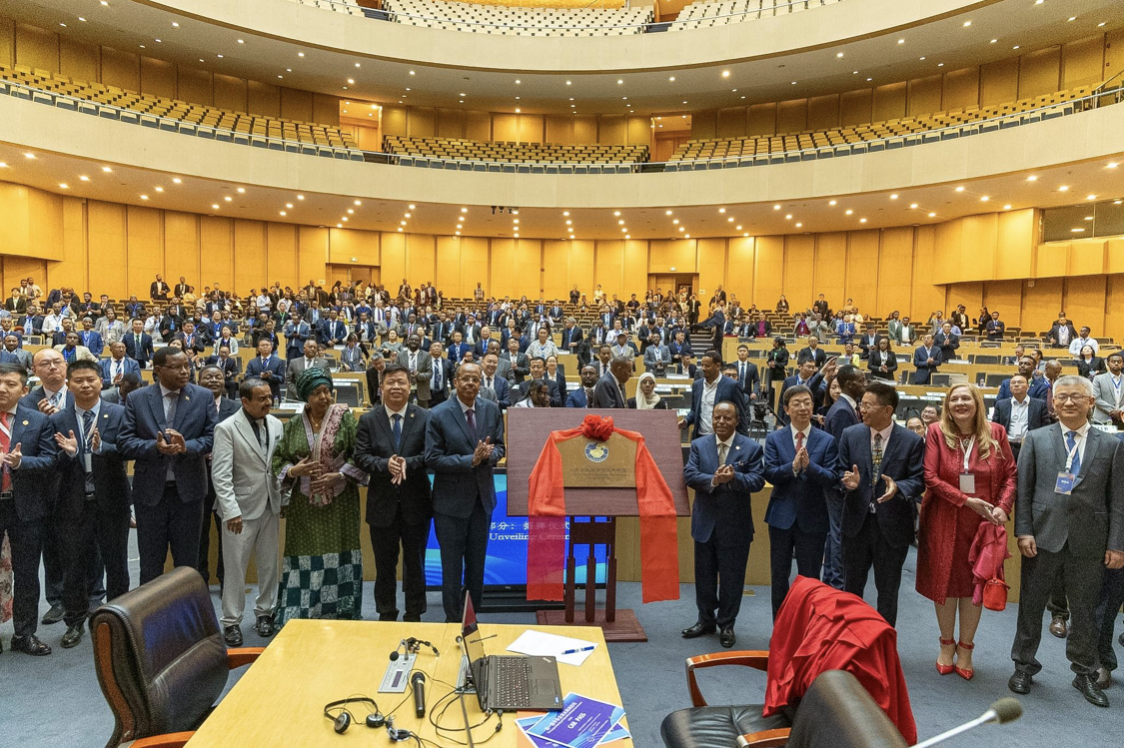
Ethiopia’s President Taye Atske Selassie in company of African Union (AU) Commission Chairperson Mahmoud Ali Youssouf with section of delegates attending the inaugural Africa–China Entrepreneurs Summit (CAES), Addis Ababa, Ethiopia on 21/04/2026.
The inaugural meeting of the China-Africa Summit held at the African Union (AU) headquarters in Addis Ababa, with a call to deepen China-Africa cooperation to ensure common development.
The meeting held under the theme “Deepening Practical China-Africa Cooperation and Embarking on a New Journey for Development,” brought together AU leadership, senior Chinese and African officials, members of the Chinese and African diplomatic communities, as well as representatives of the business communities from both sides.
The event witnessed a significant milestone in China-Africa relations, signalling a shift from traditional infrastructure lending toward private-sector-led cooperation and industrialization.
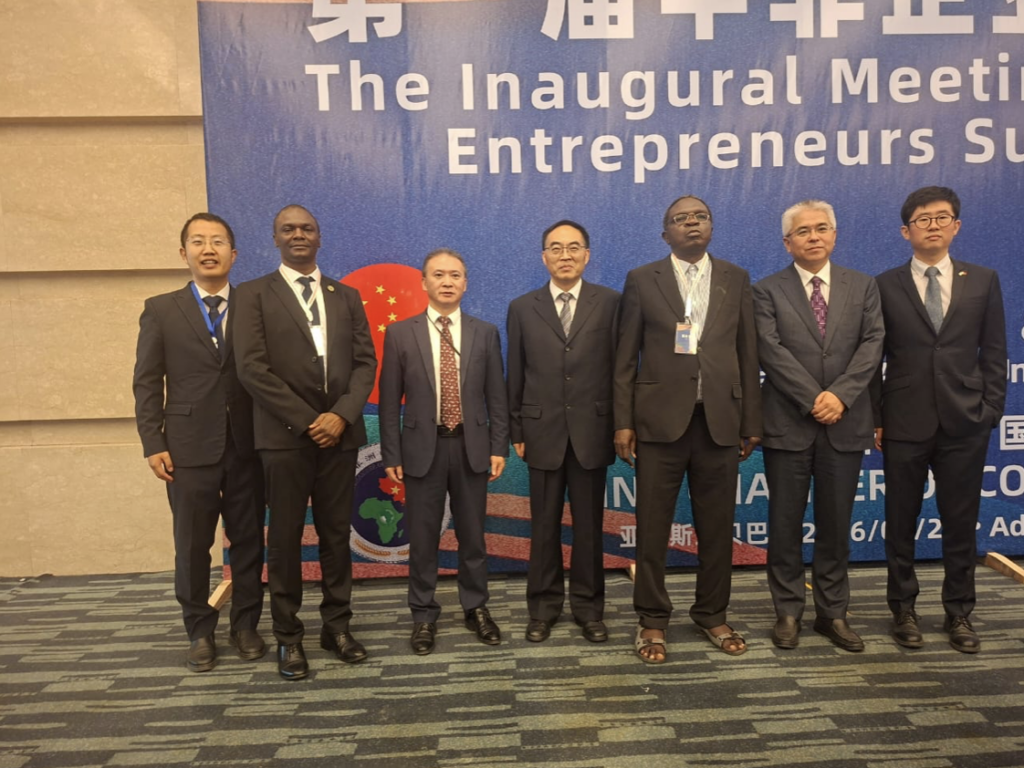
AFCONE Commissioner Prof Gracien Ekoko in company of Interim Executive Secretary Mr. Colins Omondi pose for a group photo with Chinese diplomats.
Held under the theme “Deepening Practical China-Africa Cooperation and Embarking on a New Journey for Development,” the summit highlighted the role of entrepreneurship in achieving the goals of the AU Agenda 2063.
Ethiopian President Taye Atske Selassie urged the gathering to transition from building infrastructure to cultivating innovation, vocational training, and “joint modernization”.
AU Commission Chairperson Mahmoud Ali Youssouf highlighted Africa as a future engine of global growth, calling for deeper cooperation between entrepreneurs and the creation of “joint value chains” to create jobs and enhance industrial growth.
While discussions covered diverse economic sectors, the core focus for the future of African power was the acceleration of energy partnerships, particularly in the civil nuclear sector.

The summit solidified a new model of partnership focusing on “joint modernization.” Chinese firms are looking to export advanced technologies, including Small Modular Reactors (SMRs), moving beyond previous cooperation models that focused primarily on traditional coal or hydropower.
With Africa’s population booming, leaders are seeking stable, low-carbon, base-load electricity. Nuclear energy is recognized as essential to supplement intermittent renewables like solar and wind, particularly for industries requiring continuous energy, such as data centers and mining.
This summit serves as a platform to accelerate the 2025-2027 Beijing Action Plan, which includes the China-Africa Forum on the Peaceful Use of Nuclear Technology. It allows African nations to leverage Chinese technical capacity to reach energy sovereignty by 2030, reducing reliance on external power solutions