
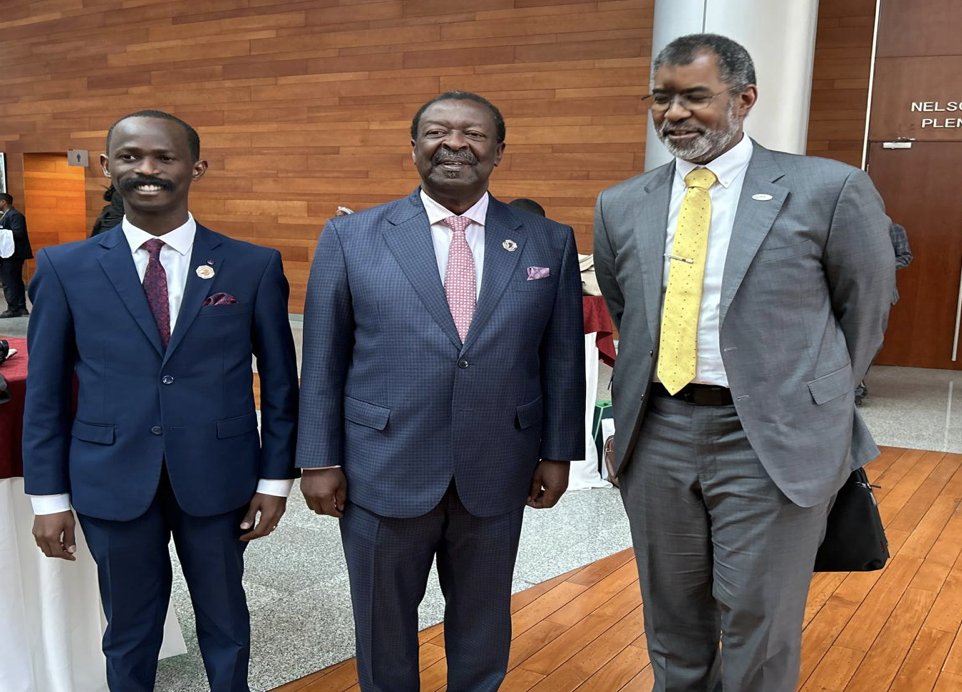
H.E. Gaspard Liyoko MBOYO, AFCONE Chairperson engaging H.E. Hon Musalia Mudavadi the Kenya Prime Cabinet Secretary and Minister for Foreign Affairs in company of Mr. William D. Magwood, the Director General of Nuclear Energy Agency (NEA) at the margin of African Union Sumit in Ethiopia, on 13TH February 2026.
African Heads of State, Government officials, over 20,000 guests, alongside the Secretary-General of the United Nations gathered for the 39th African Union Summit to address critical issues of sustainable development, energy security, and economic transformation.
The 39th African Union Summitvalidates Africa’s increasing geopolitical relevance and fortifies partnership with global actors. The summit facilitated a high-level discussion on peace, economic cooperation, and sustainable development. The gathering provides the primary platform for African leaders to harmonize voices on crucial issues like regional security, economic integration, climate change, and fair global representation among others.
AFCONE delegation, led by Chairperson Mr. Gaspard Liyoko MBOYO participated in the 39th Session of the Assembly of the African Union.
During this session, AFCONE highlighted its role in reinforcing nuclear security, promoting peaceful applications of nuclear science, and held bilateral meetings with Member States and institutional partners.
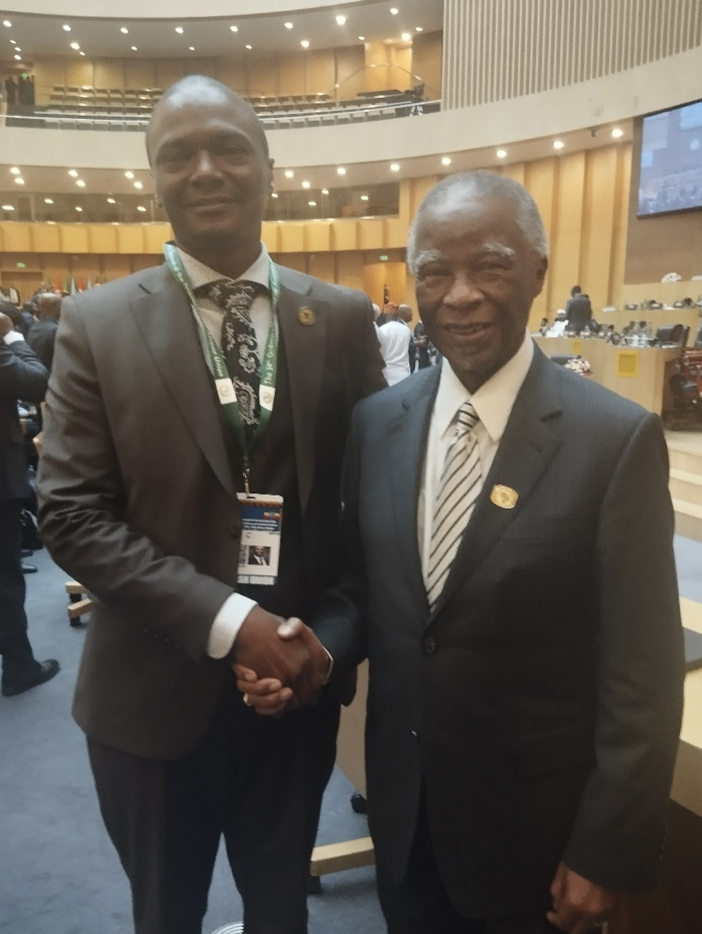
Mr. Collins Omondi, AFCONE acting Executive engaging Mr. Thabo Mbeki, former Republic of South African President at the margins of African Union Sumit in Ethiopia, on 15TH February 2026.
The African Heads of State launched the African Union theme of the year “Assuring Sustainable Water Availability and Safe Sanitation Systems to Achieve the Goals of Agenda 2063”. The 2026 theme is linked to Agenda 2063, the African Union’s 50-year development framework aimed at, among others, transformation, inclusive growth, poverty eradication, improved food security, and climate resilience.
Achieving the ambitious goals of Agenda 2063, specifically regarding sustainable development and climate resilience, will require looking beyond traditional infrastructure but application of science, including nuclear technology, to unlock, protect, and manage Africa’s most precious resources.